
Arrest Records in Waukesha County
An arrest record begins at booking. When a law enforcement agency arrests someone, the person is taken to the Waukesha County Jail, where staff process intake, confirm identity, and assign housing. That booking creates the first public trace: the person shows up on the county's current inmate list while they remain in custody. The arrest itself, and the charges behind it, then move into the court system through the Criminal/Traffic Division.
The Criminal/Traffic Division of the circuit court is where charges are filed and tracked. Its page links ticket and fine payment, the right to an attorney, and expungement resources. Arrest data and criminal court data work together. The jail roster shows who is held, while the court record shows what happens to the charges.
A typical arrest leaves a trail across both systems. The booking notes the name, the holding facility, and the date. The court file adds the charge description, the statute number, the severity or class, the plea, and the final disposition. Felony cases carry the CF code and misdemeanors carry CM. Reading them together gives you the full arc, from the moment of arrest to the outcome of the charge.
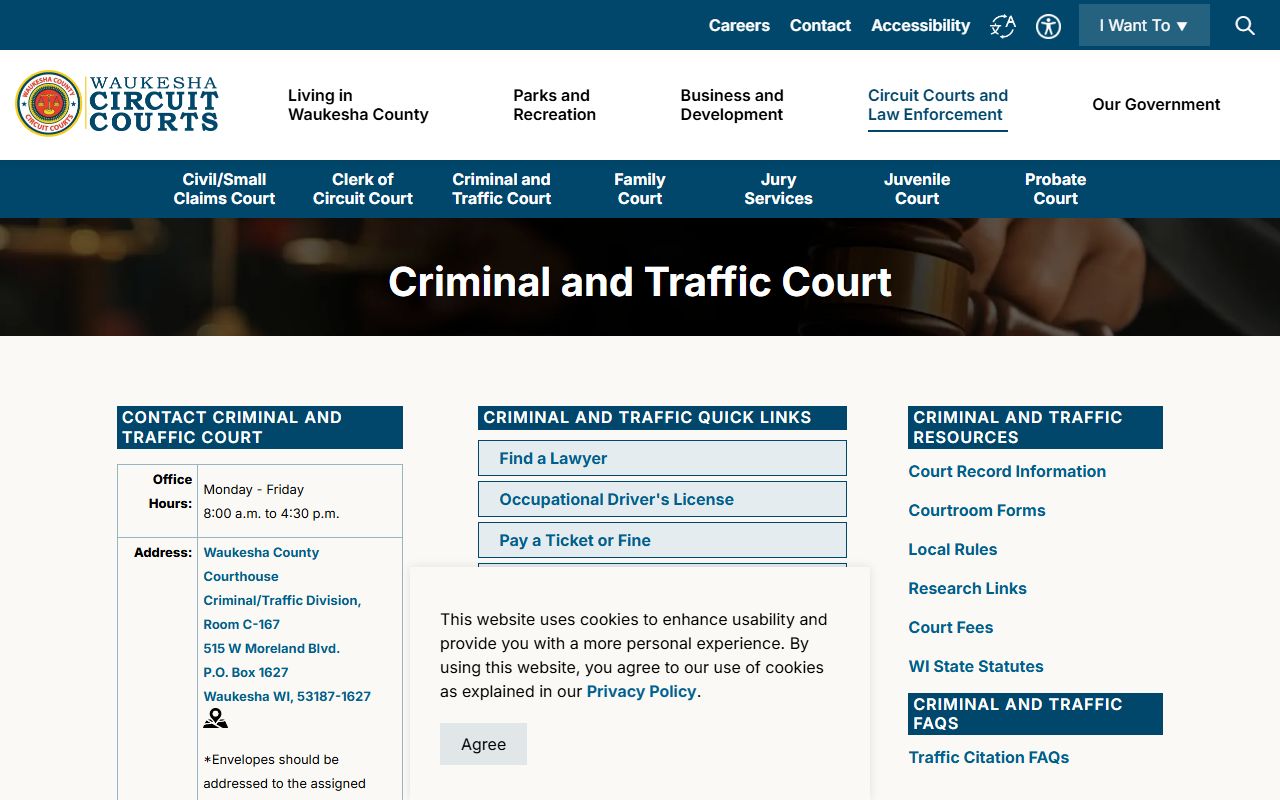
The county's Criminal/Traffic Court page is the official hub for charges that follow an arrest.
How to Search Waukesha County Arrest Records
There is no single arrest database for the county. Instead, you check two sources side by side. For someone still in custody, the Sheriff's current inmate list shows the booking. For the charges and case outcome, you use Wisconsin Circuit Court Access. The Sheriff's office also posts reports that cover notable incidents and arrests.
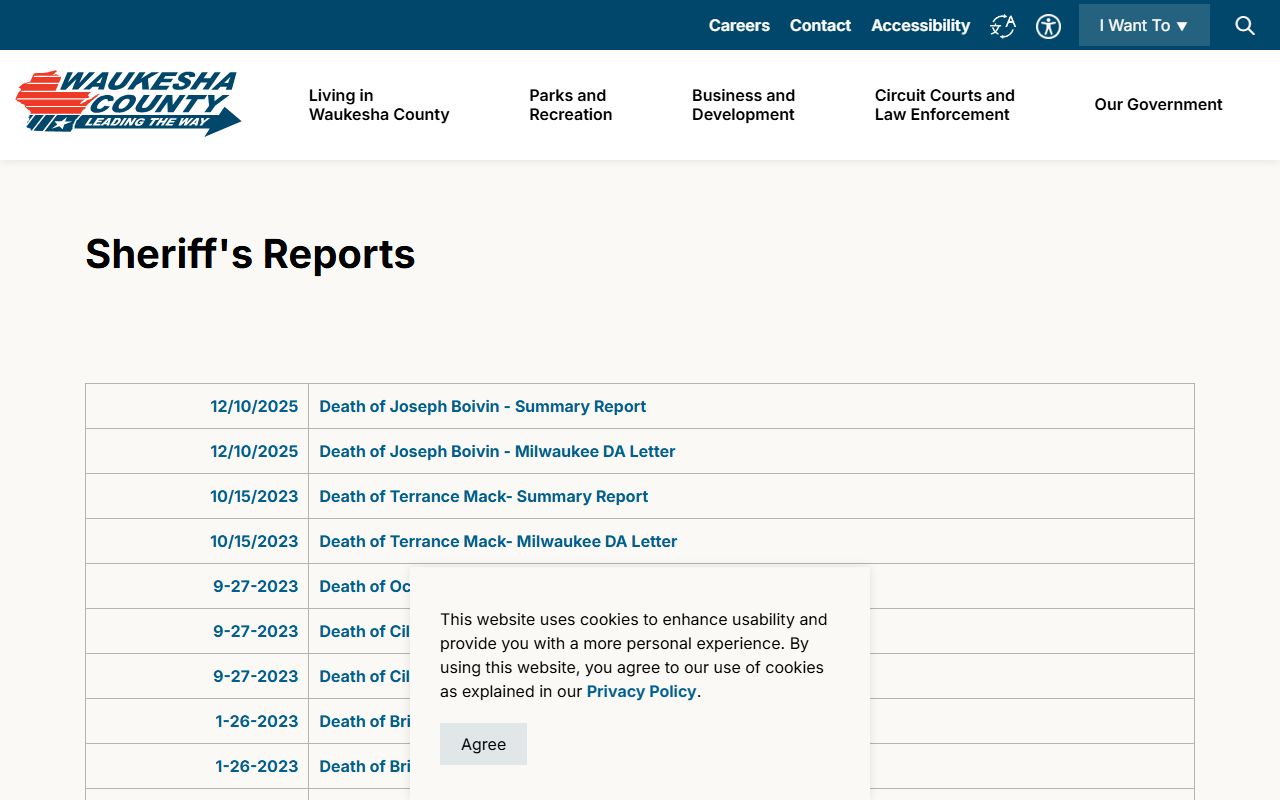
The Sheriff's reports page publishes critical-incident summaries, which sometimes name an arrest.
- Check the Waukesha County inmate records page to see if the person is in custody now.
- Open WCCA, set the county to Waukesha, and search by name.
- Look for a CF (felony) or CM (misdemeanor) case tied to the arrest date.
- Read the charges, statute, plea, and disposition on the case summary.
- For certified copies, contact the Criminal/Traffic Division at 262-548-7484.
Booking, Bail, and Custody After an Arrest
After an arrest, the arresting agency brings the person to the county correctional facility. Jail staff handle intake. They identify the person, inventory property, screen for medical, mental health, and security needs, and assign a housing pod. From that point, the person appears on the hourly current inmate list until they are released. Court-related bond and initial-appearance details are tracked through the court record, not the jail roster.
Bail can free a person before the case ends. During normal business hours, bail set in a Waukesha County Criminal/Traffic Court case may be posted at the courthouse Business Center, Room 112. All other bail postings go through the Sheriff's Department. The Sheriff accepts cash, certified funds, cashier's checks, Visa, Discover, and MasterCard. The release that follows a posted bond is different from a release at the end of a sentence, and both show up by the person dropping off the current roster.
To watch custody status in real time, use the Waukesha County inmate records page, and check released inmates tools to confirm a release.
Arrest Records vs. Criminal Court Records
These two records answer different questions. An arrest record says a person was taken into custody. A criminal court record says what the prosecutor charged and how the case ended. One can exist without the other. Police can arrest without a charge ever being filed, and a charge can be filed by summons with no arrest at all.
| Feature | Arrest Record | Criminal Court Record |
|---|---|---|
| Source | Sheriff's jail booking and roster | Circuit court, Criminal/Traffic Division |
| Shows | Booking, custody status, holding facility | Charges, pleas, disposition, sentence |
| Where to find it | Current inmate list | WCCA case summary |
| Outcome | Does not show guilt | Shows the legal result of the charge |
For full case history, the Waukesha County court records page covers the circuit court side in depth.
Charges vs. Convictions
The most common mistake in reading a criminal record is treating a charge as a conviction. A charge is an accusation. A conviction is a finding or plea of guilt. A case file can list several charges, then show that most were dismissed or amended down. The disposition line, not the charge line, tells you the real result.
| Point | Charge | Conviction |
|---|---|---|
| Meaning | An accusation that must be proven | Guilt established by plea or finding |
| Stage | Filed at the start of a case | Entered at or after the plea or trial |
| Can change | Yes, dismissed or amended | Final unless appealed or vacated |
When you read a Waukesha County criminal record, scan to the disposition before you judge the case.
Sealed vs. Expunged Records
Wisconsin treats sealing and expungement as separate things, and both are narrower than people expect. A sealed record is withheld from public view by a court order, but it still exists. An expunged record of conviction is removed from the public court file under the state expungement statute. Waukesha County links state materials and the CR-266 petition used for sentences imposed on or after July 1, 2009.
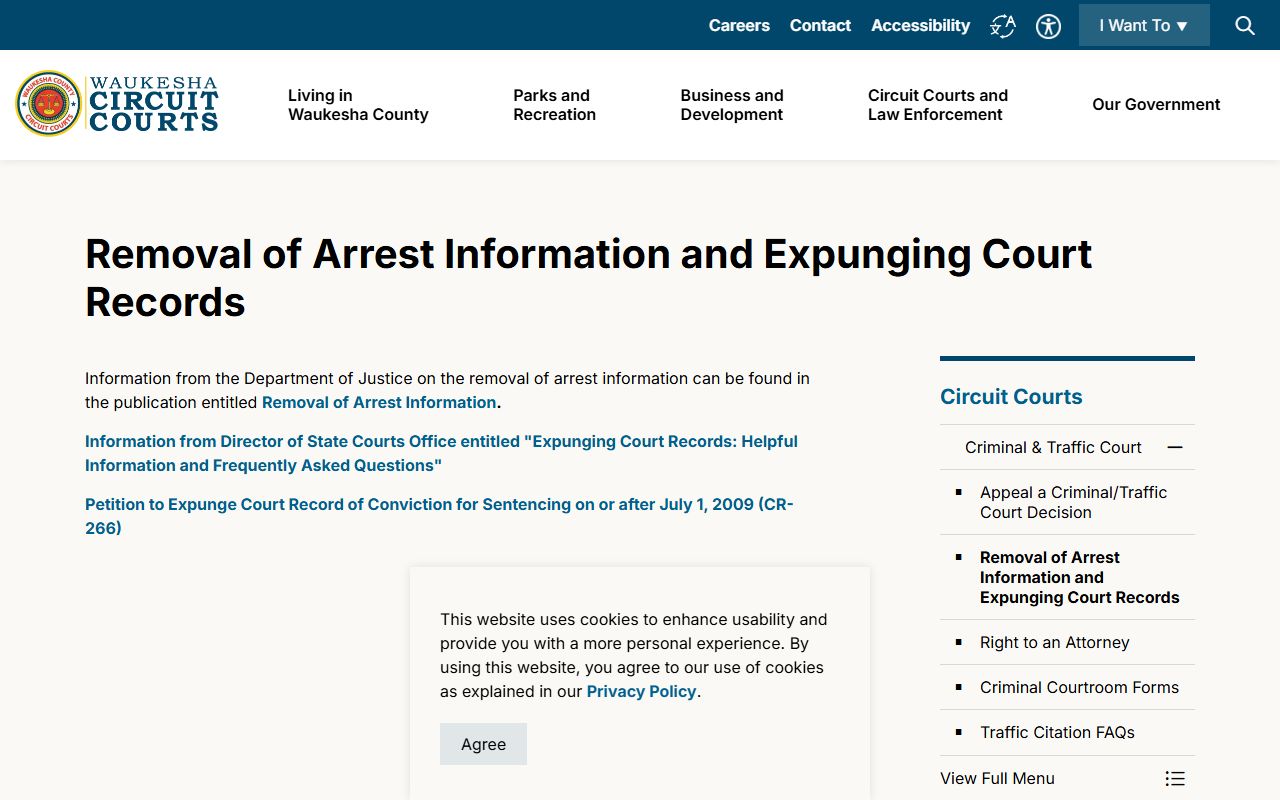
The county's arrest information removal page explains the difference between clearing an arrest and expunging a conviction.
| Feature | Sealed Record | Expunged Record |
|---|---|---|
| What happens | Hidden from public access | Conviction record removed from public court file |
| Still exists? | Yes, by court order | Court file removed; other agency records may remain |
| How it starts | Court motion and order | Judge's order at sentencing, then a petition |
Mugshots and Booking Photos
Waukesha County's public inmate list reads like a name-based roster rather than a photo gallery. Booking photos are not clearly published on the public list, so do not assume a mugshot is available for every arrest. When a photo does appear in public, it is usually through a Sheriff's news release tied to a specific incident, not a routine roster feature.
If you need to confirm an identity, the better path is the case record, which ties a name and date of birth to a court file. Treat third-party mugshot sites with caution. They are not official, they often charge to remove a photo, and they may show old or wrong information.
Statewide Criminal Records and the District Attorney
County records are only part of the picture. Wisconsin keeps statewide criminal history through the Department of Justice, and a formal background check pulls from that state record, not just the county court file. The state expungement statute sets the rules for clearing a conviction from the court record.
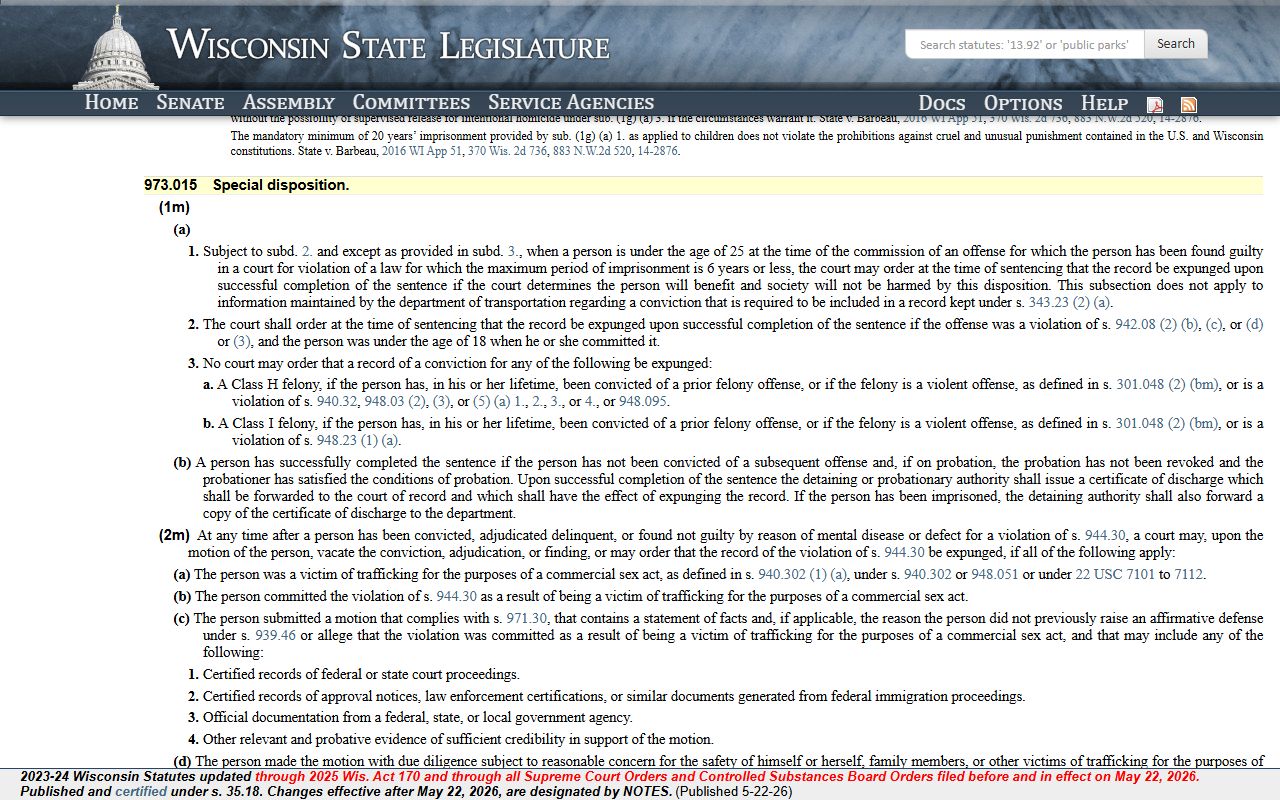
The controlling law is Wis. Stat. § 973.015, the Wisconsin criminal expungement statute.
The District Attorney prosecutes county crimes and runs diversion tracks that can change what ends up on a record. Waukesha County District Attorney Lesli S. Boese leads the office at Room 2-0700 in the courthouse, with a main line of 262-548-7076 and a Victim/Witness program at 262-548-7071.
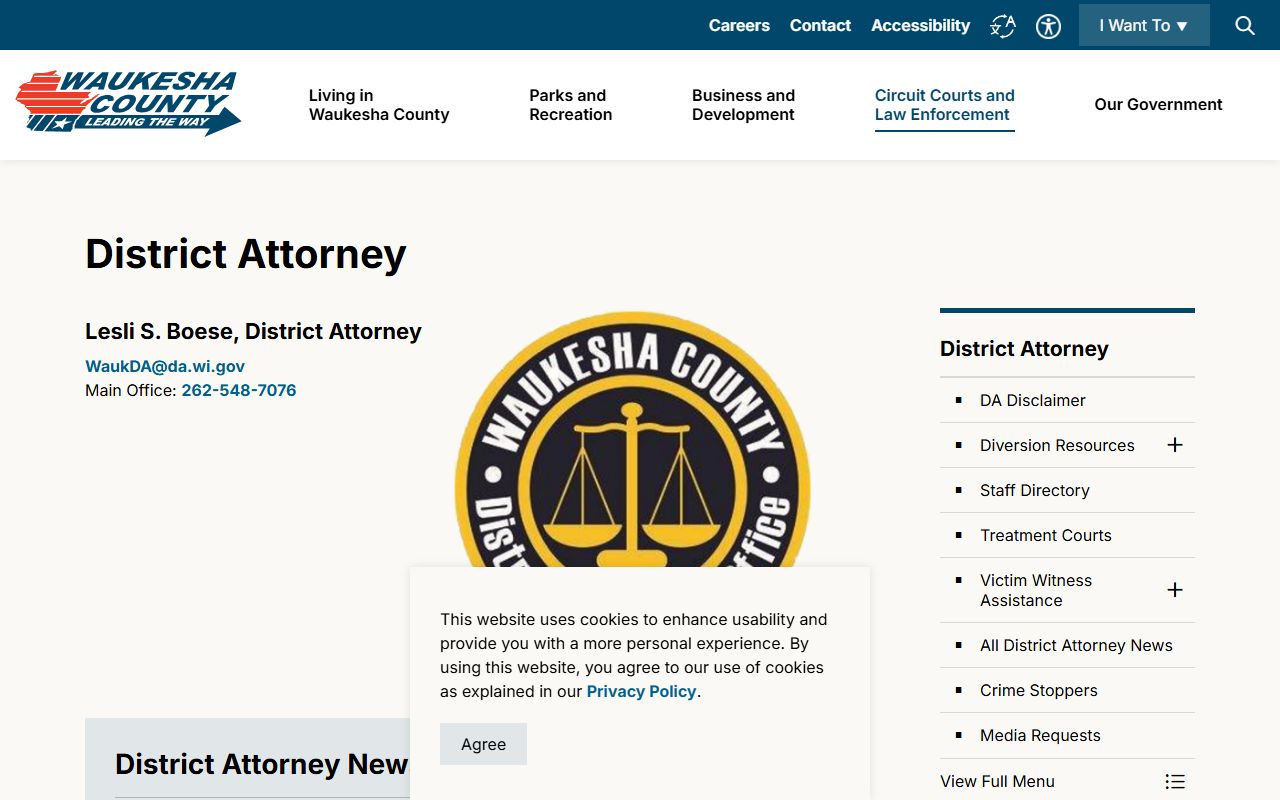
The District Attorney page links diversion resources and victim services.
The office posts its own news, including the January 2025 announcement that Lesli Boese was sworn in as District Attorney. Following the DA news can help you track policy on diversion and prosecution priorities that shape local criminal records.
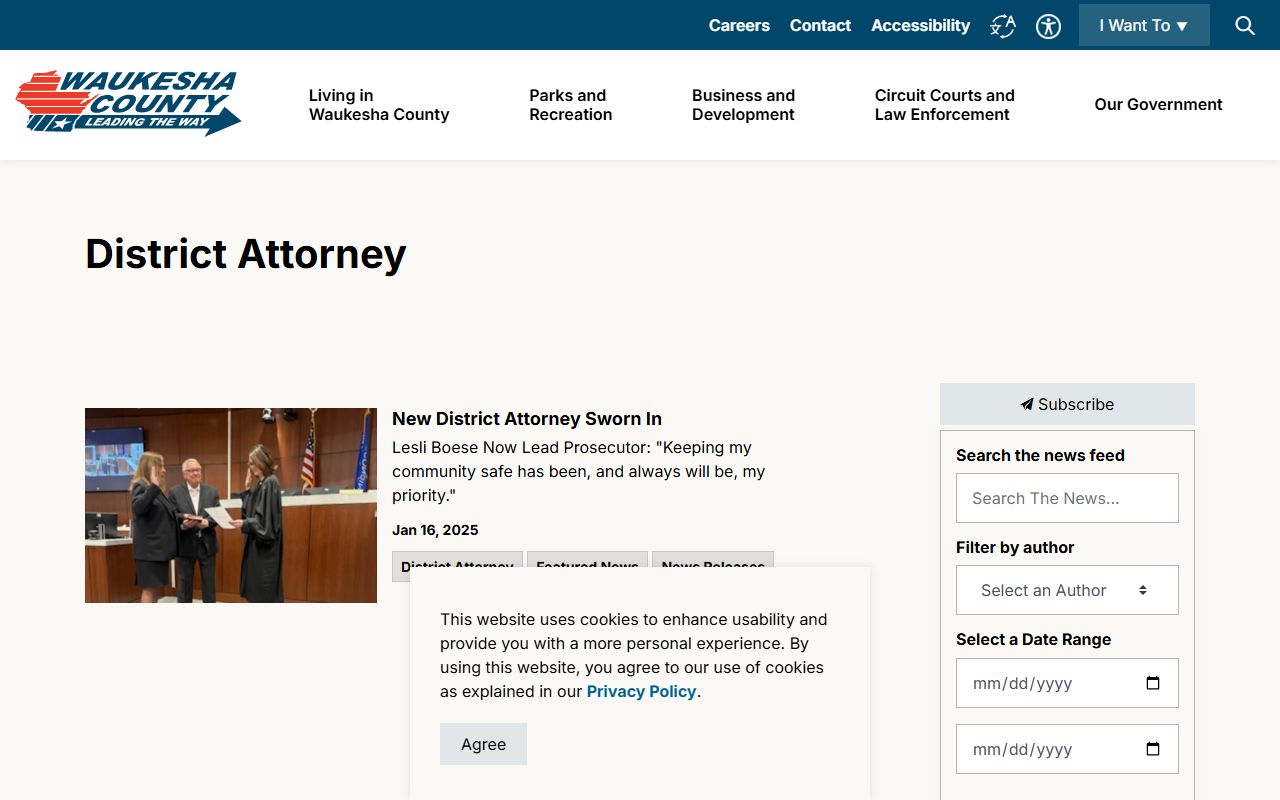
The District Attorney news page carries the office's latest announcements.
Background Check Considerations
A WCCA search is a good free start, but it is not a certified background check. It shows circuit court cases, not the full state criminal history, and it leaves out sealed and juvenile matters. For a formal screening, an employer or landlord should use the proper state or federal process and follow fair-credit rules.
Anyone charged with a crime has the right to an attorney, and may apply to the State Public Defender if they cannot afford one. The Waukesha Public Defender office sits at 407 Pilot Court, Suite 500, with interview hours on weekday afternoons.
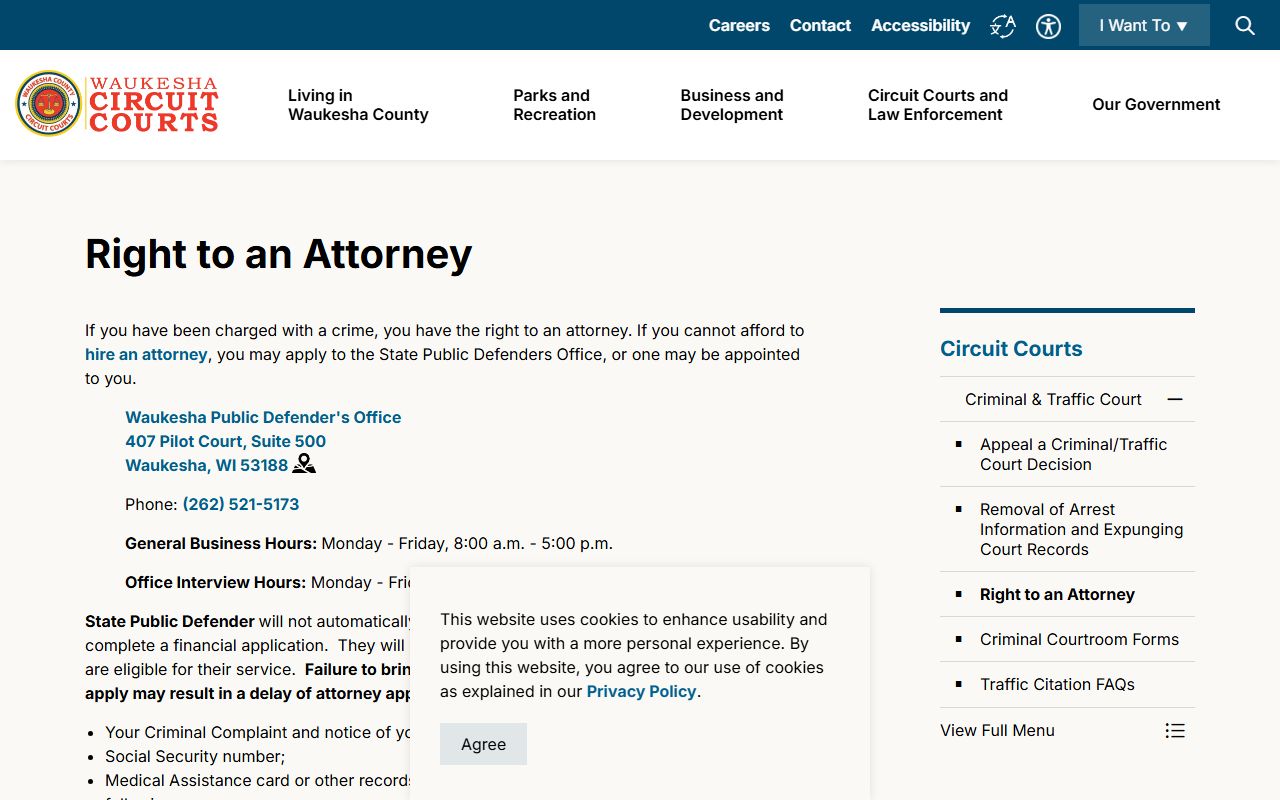
The county's right to an attorney page lists what to bring to a public defender application.
Restricted Criminal Records in Waukesha County
Some criminal-adjacent records stay closed. Juvenile cases require a juvenile court judge's approval before anyone can inspect or release them. Diversion and deferred prosecution files can be limited, especially when a charge is never filed or is dismissed after the agreement is met. Active investigation records held by the Sheriff may be withheld or redacted while a case is open.
Removing arrest information from the state record is its own process, separate from expunging a conviction. A dismissed or acquitted charge can still appear in some systems until the right removal steps are taken. When in doubt, an attorney can confirm what is possible for a specific record.