
Getting a Marriage License in Waukesha County
A marriage license comes from the Waukesha County Clerk, by appointment only. Both applicants must appear together and in person. Appointments run weekdays from 8:30 a.m. to 3:30 p.m., with earlier Friday slots in wedding season. The county recommends booking ahead, since late-afternoon and Friday times fill quickly. The whole appointment takes about 30 minutes, and applicants leave with the license in hand.
There is a key rule before you even book: you cannot start the application until the wedding date is set and the officiant is secured. The license is then valid anywhere in Wisconsin for 60 days. A three-day waiting period applies before a new license can be used, unless the County Clerk approves a waiver.
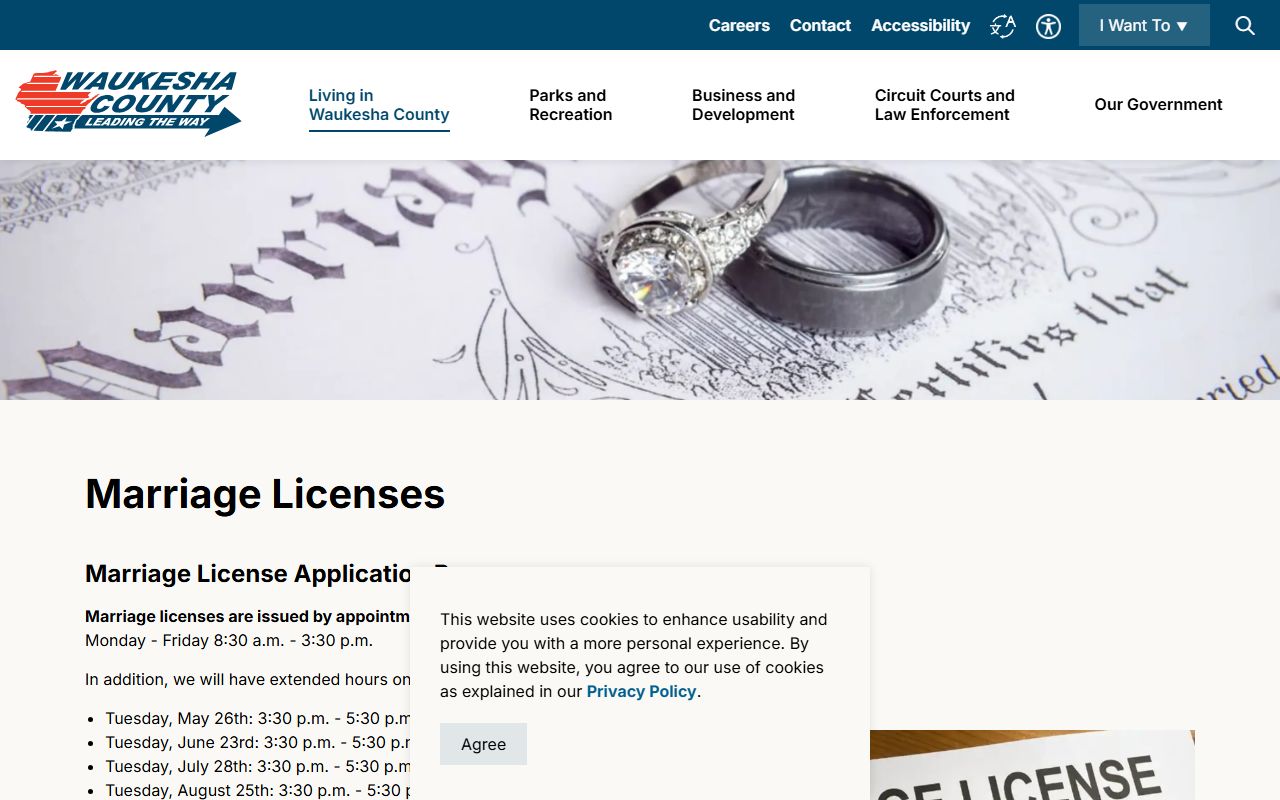
The county's marriage license page lists the appointment, fee, ID, and officiant rules.
The officiant matters under state law. Wisconsin sets out who may solemnize a marriage, including clergy, judges, court commissioners, and municipal judges, plus qualifying religious-society ceremonies. The county also notes that applicants can request Spanish-speaking help or document translation when scheduling, and that applicants may not translate for each other. After the ceremony, the officiant signs and files the license, which is what turns the license into a recorded marriage.
How to Apply for a Marriage License
The steps are straightforward once the wedding is scheduled. Both people come together with the right documents and the fee. Missing a document, like a certified birth certificate, can delay the license, so gather everything first.
- Schedule the wedding date and secure the officiant.
- Make an appointment with the County Clerk at 262-548-7010.
- Both applicants appear together in person.
- Bring valid photo ID, proof of address, and certified birth certificates.
- Bring proof of any prior marriage ending, such as a divorce judgment or death certificate.
- Provide the ceremony date, location, and officiant details, plus a Social Security number if issued.
- Pay the $110 fee and take the license with you.
Marriage License Application Fields
The county checklist sets out what each applicant must bring and provide. The table below shows the main fields and what counts as proof. A hospital birth certificate with footprints is not accepted, so bring the certified version.
| Field / Requirement | Required | Notes |
|---|---|---|
| Both applicants in person | Yes | Must appear together at the appointment. |
| Photo identification | Yes | Driver's license, state ID, or passport. |
| Proof of address | Yes | Current ID, utility bill, mortgage, or lease. |
| Certified birth certificate | Yes | Not a hospital footprint certificate. |
| Prior marriage ending | If applicable | Divorce judgment, annulment, or death certificate. |
| Ceremony and officiant info | Yes | Date, location, and officiant details. |
| Social Security number | If issued | Required when one has been issued. |
Waukesha County Marriage and Divorce Fees
Fees split by type of record and office. The marriage license has a flat fee, while divorce filing fees depend on whether minor children or support are involved. Court copies of a divorce judgment carry the standard per-page rate. The table collects the main amounts.
| Item | Amount |
|---|---|
| Marriage license | $110 |
| Waiting-period waiver | $25 |
| Divorce filing, with minor children or support | $194.50 |
| Divorce filing, without children or support | $184.50 |
| Court copy per page | $1.25 |
| Certification per document | $5.00 |
Note: Low-income filers may complete a Petition for Waiver of Filing and Service Fees, which can also waive Sheriff service costs if granted.
How to Look Up Waukesha County Marriage Records
The marriage license and the marriage certificate are different records. The County Clerk issues the license before the ceremony. After the wedding, the officiant has three business days to file the signed license with a Wisconsin Register of Deeds, which then issues the certified marriage certificate. So a record of the marriage lives with the Register of Deeds, not the court.
To get a certified marriage certificate, request it from a Wisconsin Register of Deeds after it is filed. The County Clerk and Register of Deeds page covers vital record requests in detail, including ID rules and how the county handles applications.
Older marriage records are part of the county's genealogy holdings. The Register of Deeds keeps vital records going back many decades and offers genealogy appointments for historical research. So a researcher tracing a family marriage from generations ago uses the same office, just through the genealogy process rather than the standard certified-copy request. Privacy rules still apply, and staff confirm only the information a requester already provides, rather than reading records aloud over the phone.
How to Find Waukesha County Divorce Records
Divorce in Wisconsin is no-fault. One spouse testifies under oath that the marriage is irretrievably broken, and the court divides property and addresses custody, placement, and support as needed. A statutory 120-day waiting period applies. To file in the county, at least one spouse must be a Wisconsin resident for six months and a Waukesha County resident for 30 days before filing.
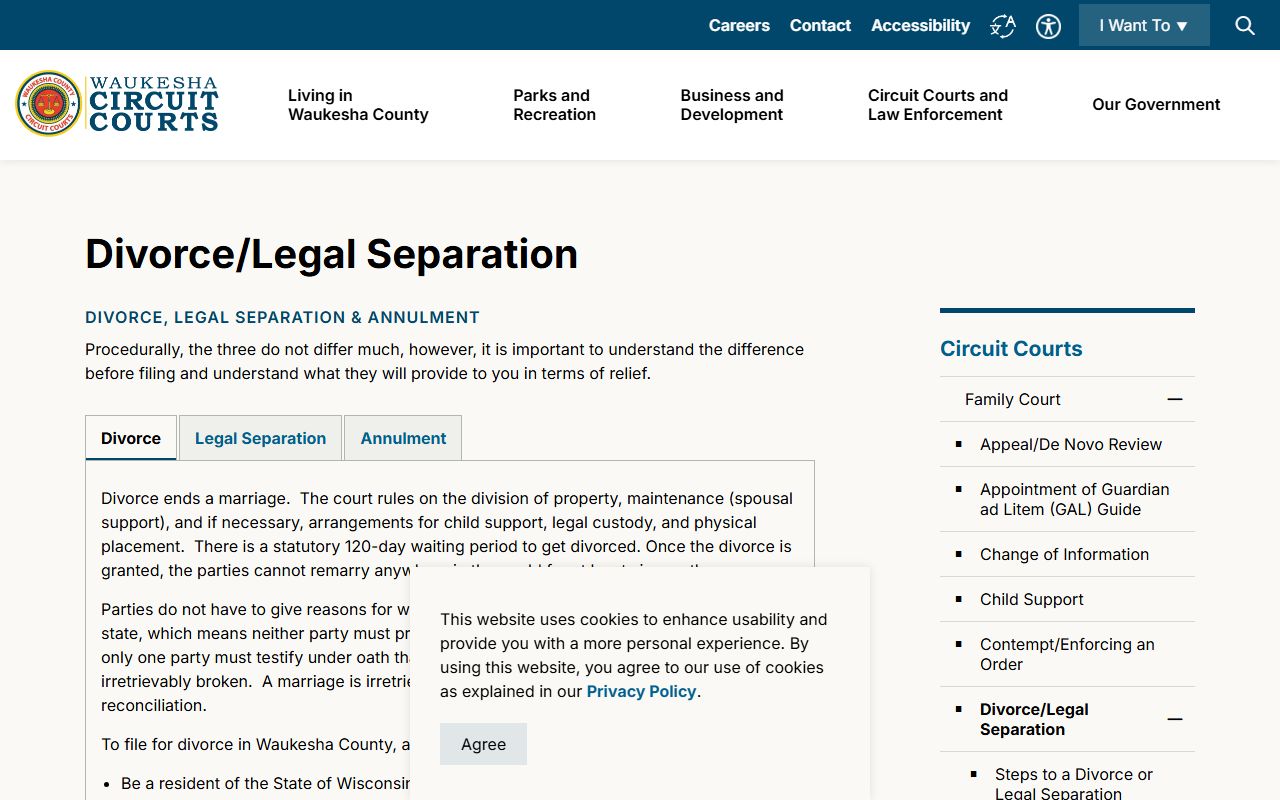
The county's divorce and legal separation page explains residency, the waiting period, and no-fault rules.
The filing itself runs through the Family Court. Parties choose forms based on whether minor children are involved, file electronically through Wisconsin eCourts or on paper in the Family Division, and pay the filing fee. Unrepresented filers should have documents reviewed for completeness before the pretrial conference.
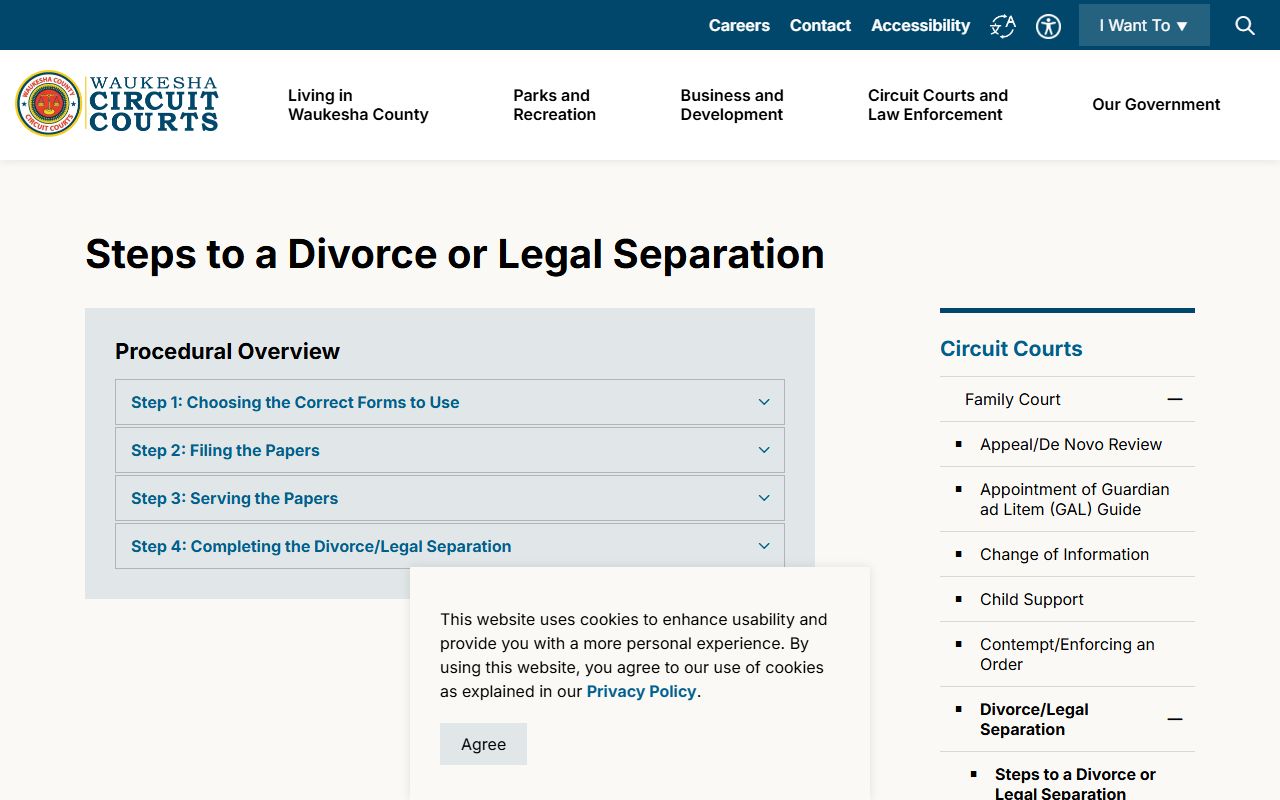
The steps to a divorce page lays out forms, eFiling, fees, service, and finalization.
A few local rules catch people off guard. Paper filers must bring five copies of each document. The other spouse has to be served using an authorized method, not just handed the papers. When minor children are involved, both parties must attend the Helping Children Cope with Divorce seminar before the case can finish. After all requirements and the 120-day wait are met, the court enters the Judgment of Divorce, which becomes the public court record of the case.
Much of the divorce file is public, but not all of it. Financial disclosures, child-related details, and any sealed documents may be restricted, even though the fact of the divorce is public. So a WCCA search can confirm a divorce case and its outcome without exposing every private document inside the file.
Getting Certified Copies
Where you go depends on which document you need. A divorce judgment or annulment judgment is a court record. For a Waukesha County judgment, contact the Clerk of Courts, Family Court, at 262-548-7544. A divorce certificate, which is the vital record of the divorce, is handled differently.
Divorce certificates from January 1, 2016 forward can be issued by any Wisconsin Register of Deeds under statewide issuance. For a divorce before 2016, go through the court in the county where the divorce occurred. Marriage certificates also come from a Register of Deeds once filed, while the underlying court file for a contested family case stays with the Family Court. Knowing this split saves a wasted trip, since the certificate and the judgment are kept by two different offices.
Wisconsin Family Law and Vital Records
Wisconsin family actions, including divorce, legal separation, custody, and support, run under the state family code. That chapter sets the legal frame for everything the Family Court decides, from property division to placement schedules.
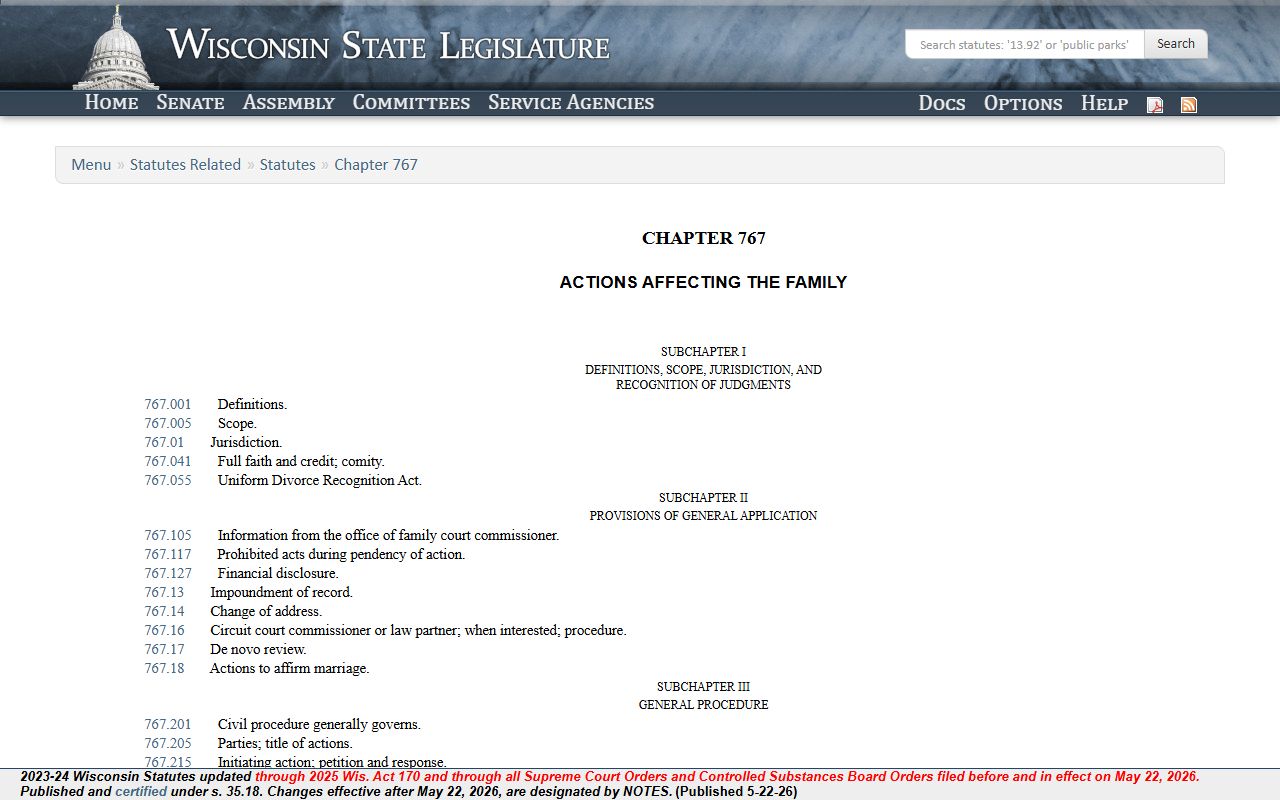
The governing law is Wis. Stat. ch. 767, the Wisconsin family code for divorce and related family actions.
On the vital records side, the County Clerk issues marriage licenses while the Register of Deeds files and issues certificates. Legal separation has no state residency rule, but still needs a 30-day county residency before filing. After a divorce is granted, parties cannot remarry anywhere for at least six months. That six-month bar surprises many people, so it is worth confirming the exact date before planning a new wedding.